
Share & Care Blog
Take a look at the posts below for some food for thought and useful tips on how to take care of yourself and your loved ones.
Like what you see? Click HERE to sign up for our newsletter!
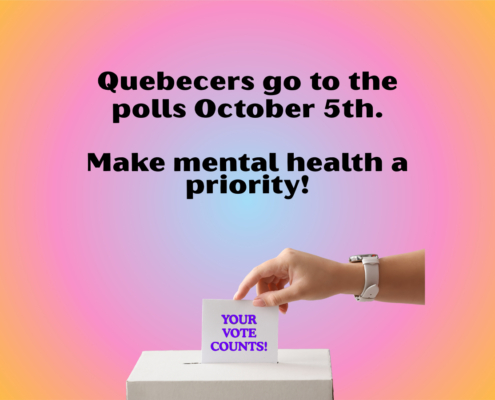 https://amiquebec.org/wp-content/uploads/2026/09/Vote-2026-featured-image-1200-x-900-px.jpg
900
1200
Diana
https://amiquebec.org/wp-content/uploads/2026/01/AMI_49-Logo.png
Diana2026-09-29 15:01:392026-09-29 15:11:30Quebec Election October 5, 2026
https://amiquebec.org/wp-content/uploads/2026/09/Vote-2026-featured-image-1200-x-900-px.jpg
900
1200
Diana
https://amiquebec.org/wp-content/uploads/2026/01/AMI_49-Logo.png
Diana2026-09-29 15:01:392026-09-29 15:11:30Quebec Election October 5, 2026 https://amiquebec.org/wp-content/uploads/2026/09/Call-For-Help.png
900
1200
Diana
https://amiquebec.org/wp-content/uploads/2026/01/AMI_49-Logo.png
Diana2026-09-21 16:49:342026-09-28 15:42:19Call for help!
https://amiquebec.org/wp-content/uploads/2026/09/Call-For-Help.png
900
1200
Diana
https://amiquebec.org/wp-content/uploads/2026/01/AMI_49-Logo.png
Diana2026-09-21 16:49:342026-09-28 15:42:19Call for help! https://amiquebec.org/wp-content/uploads/2026/09/Mythbusters-Self-Harm.png
900
1200
Diana
https://amiquebec.org/wp-content/uploads/2026/01/AMI_49-Logo.png
Diana2026-09-21 16:46:392026-09-21 16:46:39Myth Busters: Self-Harm
https://amiquebec.org/wp-content/uploads/2026/09/Mythbusters-Self-Harm.png
900
1200
Diana
https://amiquebec.org/wp-content/uploads/2026/01/AMI_49-Logo.png
Diana2026-09-21 16:46:392026-09-21 16:46:39Myth Busters: Self-Harm https://amiquebec.org/wp-content/uploads/2026/09/Schzophrenia-Treatment.png
900
1200
Diana
https://amiquebec.org/wp-content/uploads/2026/01/AMI_49-Logo.png
Diana2026-09-21 16:38:212026-09-21 16:44:18A new potential treatment for schizophrenia?
https://amiquebec.org/wp-content/uploads/2026/09/Schzophrenia-Treatment.png
900
1200
Diana
https://amiquebec.org/wp-content/uploads/2026/01/AMI_49-Logo.png
Diana2026-09-21 16:38:212026-09-21 16:44:18A new potential treatment for schizophrenia? https://amiquebec.org/wp-content/uploads/2026/09/Ditching-the-Labels.png
900
1200
Diana
https://amiquebec.org/wp-content/uploads/2026/01/AMI_49-Logo.png
Diana2026-09-21 16:37:382026-09-21 16:40:46Ditching the Labels: Should we change how disorders are classified?
https://amiquebec.org/wp-content/uploads/2026/09/Ditching-the-Labels.png
900
1200
Diana
https://amiquebec.org/wp-content/uploads/2026/01/AMI_49-Logo.png
Diana2026-09-21 16:37:382026-09-21 16:40:46Ditching the Labels: Should we change how disorders are classified? https://amiquebec.org/wp-content/uploads/2026/03/MentalHealth.png
900
1200
Diana
https://amiquebec.org/wp-content/uploads/2026/01/AMI_49-Logo.png
Diana2026-09-04 11:55:232026-09-05 16:16:42#MentalHealth: When to trust what you click on
https://amiquebec.org/wp-content/uploads/2026/03/MentalHealth.png
900
1200
Diana
https://amiquebec.org/wp-content/uploads/2026/01/AMI_49-Logo.png
Diana2026-09-04 11:55:232026-09-05 16:16:42#MentalHealth: When to trust what you click on https://amiquebec.org/wp-content/uploads/2026/09/The-Body-Keeps-the-Score-Blog.png
900
1200
Diana
https://amiquebec.org/wp-content/uploads/2026/01/AMI_49-Logo.png
Diana2026-09-02 11:17:402026-09-02 11:17:40“The Body Keeps the Score”
https://amiquebec.org/wp-content/uploads/2026/09/The-Body-Keeps-the-Score-Blog.png
900
1200
Diana
https://amiquebec.org/wp-content/uploads/2026/01/AMI_49-Logo.png
Diana2026-09-02 11:17:402026-09-02 11:17:40“The Body Keeps the Score” https://amiquebec.org/wp-content/uploads/2026/06/BLOG-Simple-Tasks.png
900
1200
Diana
https://amiquebec.org/wp-content/uploads/2026/01/AMI_49-Logo.png
Diana2026-07-26 13:12:322026-08-04 13:56:07How to cope with simple tasks in tough times
https://amiquebec.org/wp-content/uploads/2026/06/BLOG-Simple-Tasks.png
900
1200
Diana
https://amiquebec.org/wp-content/uploads/2026/01/AMI_49-Logo.png
Diana2026-07-26 13:12:322026-08-04 13:56:07How to cope with simple tasks in tough times https://amiquebec.org/wp-content/uploads/2015/07/sun-151763_640.png
640
640
Diana
https://amiquebec.org/wp-content/uploads/2026/01/AMI_49-Logo.png
Diana2026-06-30 09:36:462026-09-02 16:18:22It’s hot out there! How to take care of yourself and your loved ones
https://amiquebec.org/wp-content/uploads/2015/07/sun-151763_640.png
640
640
Diana
https://amiquebec.org/wp-content/uploads/2026/01/AMI_49-Logo.png
Diana2026-06-30 09:36:462026-09-02 16:18:22It’s hot out there! How to take care of yourself and your loved ones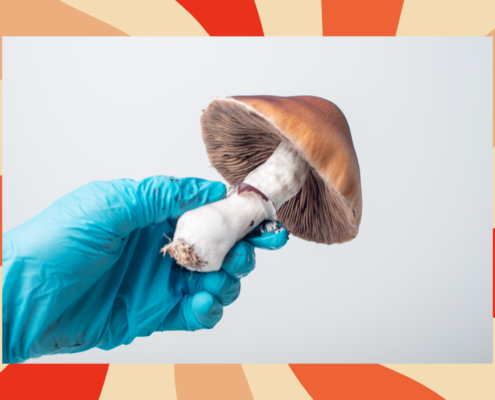 https://amiquebec.org/wp-content/uploads/2026/06/BLOG-Psychedelics.png
900
1200
Diana
https://amiquebec.org/wp-content/uploads/2026/01/AMI_49-Logo.png
Diana2026-06-26 13:13:062026-06-26 13:13:06There’s got to be a better way to treat depression! Psychedelics could be the answer
https://amiquebec.org/wp-content/uploads/2026/06/BLOG-Psychedelics.png
900
1200
Diana
https://amiquebec.org/wp-content/uploads/2026/01/AMI_49-Logo.png
Diana2026-06-26 13:13:062026-06-26 13:13:06There’s got to be a better way to treat depression! Psychedelics could be the answer https://amiquebec.org/wp-content/uploads/2026/06/BLOG-Language-Barriers-in-Health-Care.png
900
1200
Diana
https://amiquebec.org/wp-content/uploads/2026/01/AMI_49-Logo.png
Diana2026-06-26 13:11:562026-06-26 13:11:56Reducing language barriers in health care
https://amiquebec.org/wp-content/uploads/2026/06/BLOG-Language-Barriers-in-Health-Care.png
900
1200
Diana
https://amiquebec.org/wp-content/uploads/2026/01/AMI_49-Logo.png
Diana2026-06-26 13:11:562026-06-26 13:11:56Reducing language barriers in health care https://amiquebec.org/wp-content/uploads/2026/06/BLOG-Plate-Affect-Mood.png
900
1200
Diana
https://amiquebec.org/wp-content/uploads/2026/01/AMI_49-Logo.png
Diana2026-06-26 13:11:282026-06-26 13:11:28Can my plate affect my mood?
https://amiquebec.org/wp-content/uploads/2026/06/BLOG-Plate-Affect-Mood.png
900
1200
Diana
https://amiquebec.org/wp-content/uploads/2026/01/AMI_49-Logo.png
Diana2026-06-26 13:11:282026-06-26 13:11:28Can my plate affect my mood? https://amiquebec.org/wp-content/uploads/2026/06/BLOG-PPD.png
900
1200
Diana
https://amiquebec.org/wp-content/uploads/2026/01/AMI_49-Logo.png
Diana2026-06-26 13:10:412026-06-26 13:10:41Myth Busters: Postpartum Depression
https://amiquebec.org/wp-content/uploads/2026/06/BLOG-PPD.png
900
1200
Diana
https://amiquebec.org/wp-content/uploads/2026/01/AMI_49-Logo.png
Diana2026-06-26 13:10:412026-06-26 13:10:41Myth Busters: Postpartum Depression https://amiquebec.org/wp-content/uploads/2026/06/BLOG-Sarah.jpg
900
1200
Diana
https://amiquebec.org/wp-content/uploads/2026/01/AMI_49-Logo.png
Diana2026-06-26 13:07:232026-06-26 13:07:23Meet Sarah, AMI’s Newest Counsellor
https://amiquebec.org/wp-content/uploads/2026/06/BLOG-Sarah.jpg
900
1200
Diana
https://amiquebec.org/wp-content/uploads/2026/01/AMI_49-Logo.png
Diana2026-06-26 13:07:232026-06-26 13:07:23Meet Sarah, AMI’s Newest Counsellor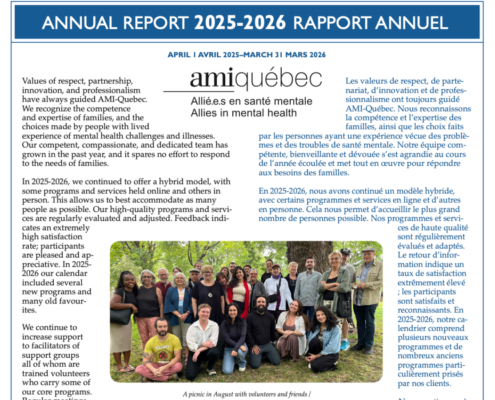 https://amiquebec.org/wp-content/uploads/2024/05/Annual-Report-2026-Featured-Image.jpg
900
1200
Diana
https://amiquebec.org/wp-content/uploads/2026/01/AMI_49-Logo.png
Diana2026-05-28 11:31:132026-07-03 12:31:23Annual Report
https://amiquebec.org/wp-content/uploads/2024/05/Annual-Report-2026-Featured-Image.jpg
900
1200
Diana
https://amiquebec.org/wp-content/uploads/2026/01/AMI_49-Logo.png
Diana2026-05-28 11:31:132026-07-03 12:31:23Annual Report https://amiquebec.org/wp-content/uploads/2024/06/Psychosis-Blog.png
900
1200
Diana
https://amiquebec.org/wp-content/uploads/2026/01/AMI_49-Logo.png
Diana2026-05-25 15:42:232026-05-26 15:46:27Delusions and hallucinations can be really scary! How to help a loved one who is dealing with psychosis
https://amiquebec.org/wp-content/uploads/2024/06/Psychosis-Blog.png
900
1200
Diana
https://amiquebec.org/wp-content/uploads/2026/01/AMI_49-Logo.png
Diana2026-05-25 15:42:232026-05-26 15:46:27Delusions and hallucinations can be really scary! How to help a loved one who is dealing with psychosis https://amiquebec.org/wp-content/uploads/2026/03/AI-Therapy.png
900
1200
Diana
https://amiquebec.org/wp-content/uploads/2026/01/AMI_49-Logo.png
Diana2026-04-26 11:53:532026-04-27 12:18:24Turning to AI for therapy–Is it a good idea?
https://amiquebec.org/wp-content/uploads/2026/03/AI-Therapy.png
900
1200
Diana
https://amiquebec.org/wp-content/uploads/2026/01/AMI_49-Logo.png
Diana2026-04-26 11:53:532026-04-27 12:18:24Turning to AI for therapy–Is it a good idea? https://amiquebec.org/wp-content/uploads/2025/12/Blog-Panic-Attacks.jpg
900
1200
Diana
https://amiquebec.org/wp-content/uploads/2026/01/AMI_49-Logo.png
Diana2026-03-29 16:14:462026-09-02 16:17:07How to Help Someone Experiencing a Panic Attack
https://amiquebec.org/wp-content/uploads/2025/12/Blog-Panic-Attacks.jpg
900
1200
Diana
https://amiquebec.org/wp-content/uploads/2026/01/AMI_49-Logo.png
Diana2026-03-29 16:14:462026-09-02 16:17:07How to Help Someone Experiencing a Panic Attack https://amiquebec.org/wp-content/uploads/2021/06/Accessibility.png
1600
2000
Diana
https://amiquebec.org/wp-content/uploads/2026/01/AMI_49-Logo.png
Diana2026-03-04 16:10:342026-03-05 11:41:49Accessibility
https://amiquebec.org/wp-content/uploads/2021/06/Accessibility.png
1600
2000
Diana
https://amiquebec.org/wp-content/uploads/2026/01/AMI_49-Logo.png
Diana2026-03-04 16:10:342026-03-05 11:41:49Accessibility https://amiquebec.org/wp-content/uploads/2026/03/AI-Psychosis.png
900
1200
Diana
https://amiquebec.org/wp-content/uploads/2026/01/AMI_49-Logo.png
Diana2026-03-02 11:52:172026-03-09 15:39:01AI Psychosis: The Darker Side of AI
https://amiquebec.org/wp-content/uploads/2026/03/AI-Psychosis.png
900
1200
Diana
https://amiquebec.org/wp-content/uploads/2026/01/AMI_49-Logo.png
Diana2026-03-02 11:52:172026-03-09 15:39:01AI Psychosis: The Darker Side of AISign up for our emails to stay in touch
Please also follow us on: